

Show Notes
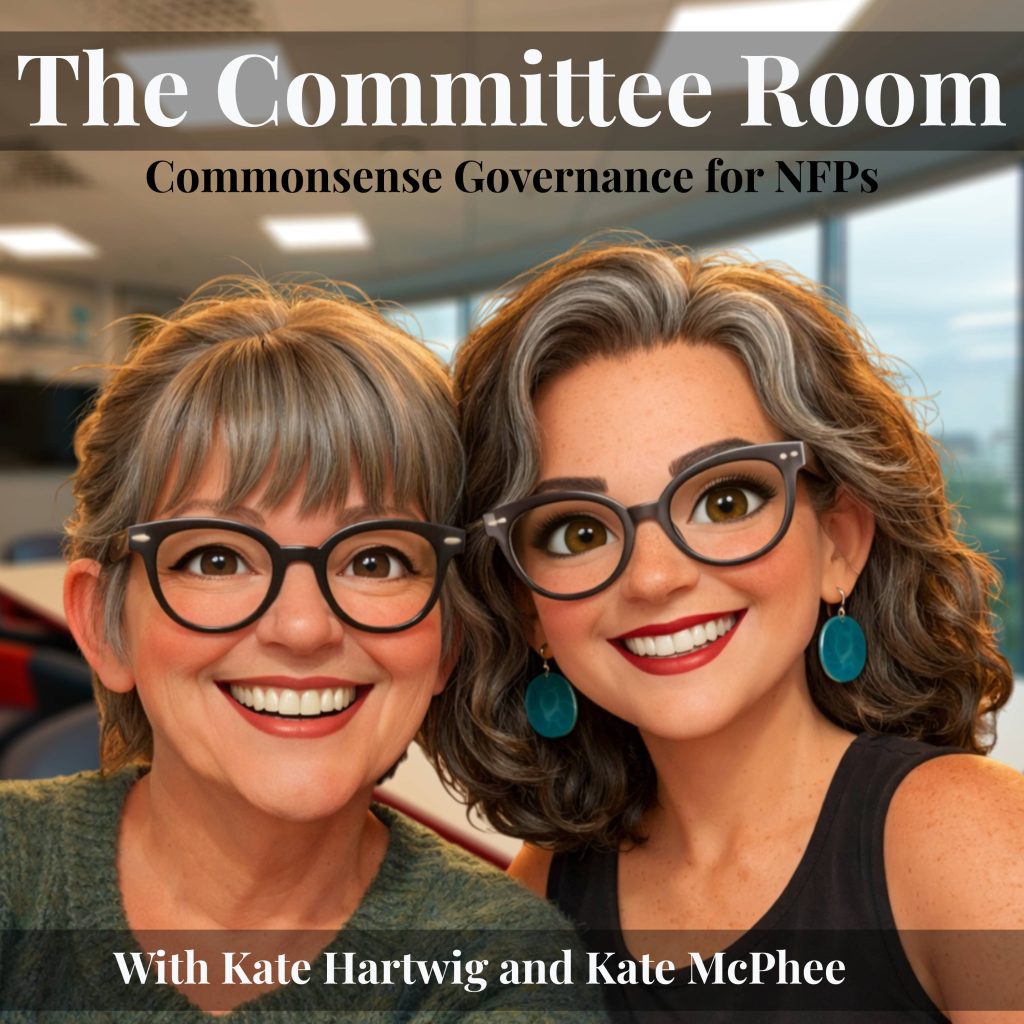
A budget built by adding a percentage to every line from last year looks sensible, gets approved, and still doesn’t answer the questions that matter. What are we doing differently this year? Are membership numbers changing? Is there a new program, or something that’s about to need replacing? Kate Hartwig and Kate McPhee call it the zombie budget — and this episode is about building the real thing instead.
The Kates start with who does the work. Budgeting is a job for the whole committee, it’s linked to your strategic and operational plans, and it starts with a conversation around the table before anyone opens a spreadsheet. A finance subcommittee of two or three people, chaired by the Treasurer, then turns those decisions into a draft. From there it’s method: historic budgeting for the steady costs, zero-based budgeting for anything new, and Kate M’s rule from Just a Tick — estimate expenses high and income low. Then the planned surplus, and why “we budget to break even” is a slow way to go broke.
The second half covers timing and the long view. A cash flow budget shows you which months will be tight before you get there, so a big bill doesn’t land when the bank balance is at its lowest. The Assets Register — promised back in Episode 23 — keeps your reports accurate and tells you what’s wearing out, so you can put money aside in a sinking fund instead of running an emergency sausage sizzle. And once the budget is approved, it gets compared with the actual figures every month, because approval night is the starting line, not the finish line.
In This Episode
- The zombie budget — what happens when last year’s figures get a CPI bump and nobody asks what’s changing this year.
- Budgeting is a committee job — how the budget links to your strategic and operational plans, and the three questions to ask before anyone opens a spreadsheet.
- The finance subcommittee — two or three people, chaired by the Treasurer, who build and test the draft so the Treasurer isn’t carrying the whole year alone.
- Budget timing — why an organisation with a July to June financial year needs the conversation to start well before the June meeting.
- Historic and zero-based budgeting — using three to five years of figures for steady costs, and building new or unpredictable items up from zero.
- Expenses high, income low — Kate M’s conservative estimating rule, and why an untried fundraiser shouldn’t be carrying your budget.
- The planned surplus — why “budget to break even” leaves you with no buffer, and the two jobs a surplus does: building reserves and paying for your plans.
- Deficit budgets — when spending some of your past surpluses is a valid choice — as long as it’s a choice and not a surprise.
- Cash flow budgeting — why the timing matters as much as the total, and practical ways to manage the tight months before they arrive.
- The Assets Register — what to record, why it keeps your reports accurate, and how it shows you what’s wearing out and when.
- Sinking funds and asset management plans — setting money aside for big costs you know are coming, and looking after the building before the turrets start falling off.
- Finance and operating leases — which leased items belong on the register and which are simply an expense.
- Budget vs actual — why the Treasurer’s report should compare the two every month, and the habits that make good financial management stick.
Free Download
Assets Register Template — from the Committee Companion. A starting point for recording everything your organisation owns or controls. Use it to start a register if you don’t have one, or to check that the one you’ve got is complete and up to date.
Join Our WhatsApp Community
The Committee Room now has a WhatsApp Community. It’s another way to get in touch with the Kates — send a voice note with your governance question (you might just hear it on the show), tell us about your experience on a not-for-profit committee, or simply keep up with new episodes.
WhatsApp: 0421 451 655 or JOIN HERE
Want to Go Further?
Kate McPhee’s Just a Tick covers conservative budgeting and sinking funds in plain English. Kate Hartwig’s Committee Companion — home of this week’s Assets Register template — has more financial templates and tools you can use straight away. And if this series has raised questions for your committee — whether your reports are telling the whole story, whether your budget connects to your plans, or whether you’ve got the right structures in place to protect your money — the Kates can help, through their own businesses or together through Fresh Allsorts. Details at freshallsorts.com.au.
This Week’s Challenge
Have a look at how this year’s budget was built. Did more than one person build it? Does it include a planned surplus? Does it have a month-by-month cash flow view? If the answer to any of these is no, put the next budget on the agenda now — not two weeks before the end of the financial year.
Got a Question for the Kates?
Use the contact form at thecommitteeroom.com.au. Or send a voice note or message to our WhatsApp Community on 0421 451 655 — details above.
About Your Hosts
Kate Hartwig has spent forty years working in and around not-for-profit and membership organisations — as a CEO, director, and independent consultant. Her Committee Companion is a head start on good governance with checklists, frameworks and exemplars for committee members. katehartwig.com.au
Kate McPhee has three decades of hands-on experience helping small clubs and associations get more done with less stress. She is the author of Just a Tick, a plain-English governance guide for committees and boards. liquoriceallsorts.com.au
Together they offer governance health checks, the Constitution Composer, and other practical support through Fresh Allsorts.
This podcast provides general information on best practice governance for small to medium not-for-profit associations. It is not legal or financial advice.
Timestamps
00:03 — It’s Budget time!
01:33 — Introducing the Kates and this episode on financial planning and budgeting
02:41 — Budgeting is not just the Treasurer’s job
03:01 — Budgeting is linked to Planning
03:25 — Three questions for the Committee to ask at budget time
03:44 — The Finance Subcommittee
04:17 — Budget Timing
04:33 — Historic and Zero Based Budgeting
05:28 — Estimate expenses high and income low
06:32 — Why you should never “budget to break even”
08:14 — Cash flow budgeting
10:03 — Asset Register
10:30 — Why does Asset Management matter?
11:09 — Sinking fund
11:35 — Asset management plan
12:04 — Finance and operating leases
12:41 — Budget vs actual — every month
13:21 — The habits of good financial management
14:43 — Recap
15:19 — Improvement challenge and next week’s Halloween special — Governance After Dark!
Next Episode
Governance After Dark — our Halloween special. Zombie decisions, ghost policies, the werewolf committee member: the Kates turn the lights down low on the creatures that lurk in committee rooms. Every monster is a real governance problem, and every one comes with a real fix.
Resources & Links
🎙️ The Committee Room thecommitteeroom.com.au — episode archive, show notes, downloads and contact form
💬 The Committee Room WhatsApp Community — 0421 451 655 — WHATSAPP INVITE
🍬 Fresh Allsorts freshallsorts.com.au — Governance Health Checks, the Constitution Composer and practical support from both Kates
Kate Hartwig Consulting katehartwig.com.au — including the Committee Companion, a head start on good governance with checklists, frameworks and exemplars
Liquorice Allsorts Consulting liquoriceallsorts.com.au — including Just a Tick, Kate McPhee’s plain-English governance guide
Episode 23 — Who Minds the Money? Listen here — Financial Confidence, Episode 1 of 3
Episode 24 — Reading the Numbers Listen here — Financial Confidence, Episode 2 of 3
Facebook: The Committee Room
LinkedIn: The Committee Room
You don’t need good luck if you’ve got good governance.
The Committee Room | thecommitteeroom.com.au
{ “@context”: “https://schema.org”, “@type”: “PodcastEpisode”, “url”: “https://thecommitteeroom.com.au/2026/10/11/ep-25-planning-your-numbers/”, “name”: “Planning Your Numbers”, “episodeNumber”: 25, “datePublished”: “2026-10-20”, “timeRequired”: “PT17M58S”, “description”: “Adding CPI to last year’s figures isn’t a budget. Kate Hartwig and Kate McPhee show small not-for-profit committees how to build a budget from their plans, plan a surplus on purpose, build a cash flow budget and use the Assets Register to plan for big costs before they arrive.”, “associatedMedia”: { “@type”: “MediaObject”, “contentUrl”: “https://media.transistor.fm/28f50f08/9ebe689d.mp3”, “encodingFormat”: “audio/mpeg”, “contentSize”: “16500000” }, “partOfSeries”: { “@type”: “PodcastSeries”, “name”: “The Committee Room”, “url”: “https://thecommitteeroom.com.au” }, “author”: [ { “@type”: “Person”, “name”: “Kate Hartwig” }, { “@type”: “Person”, “name”: “Kate McPhee” } ] }