
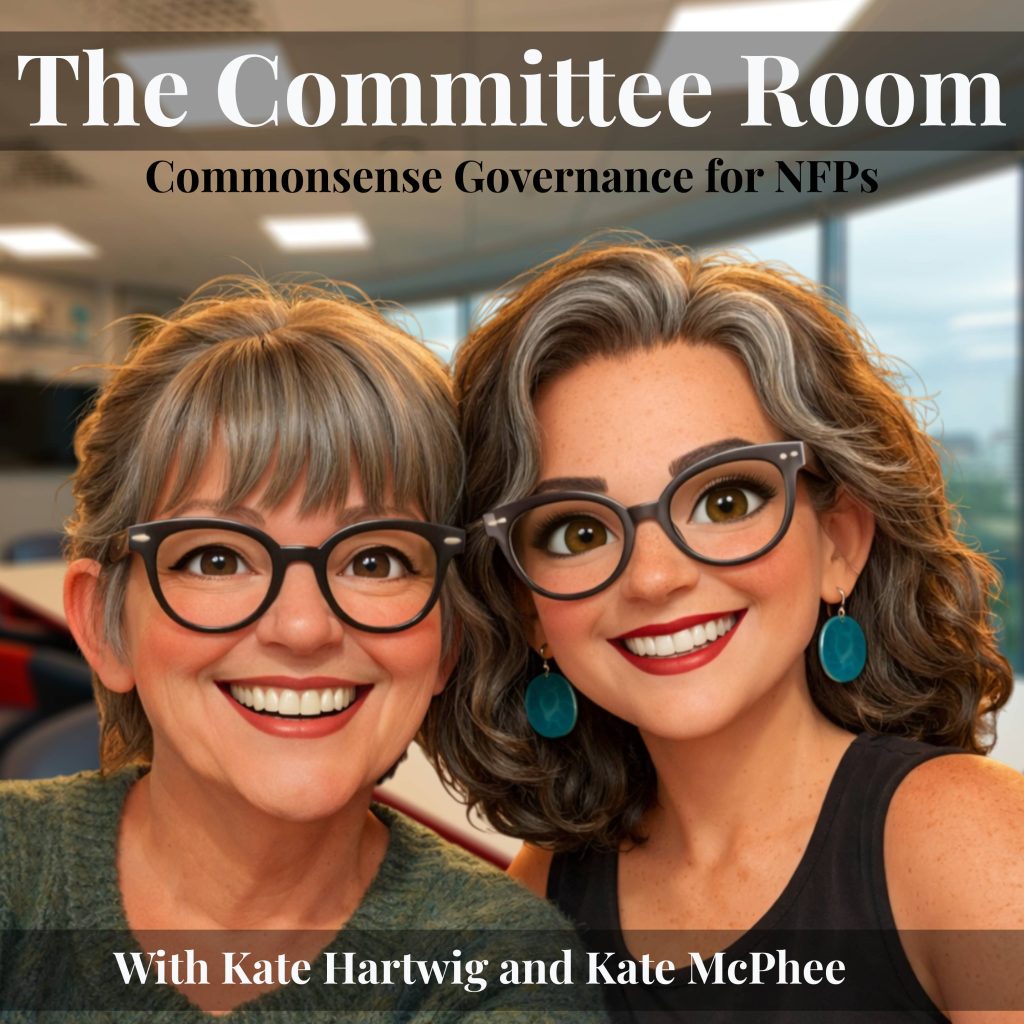

Your Constitution is binding on every member of your organisation whether they’ve read it or not. That’s not a technicality — it’s the foundation of everything the committee does. This episode covers what a Constitution actually is, the three layers of what goes in it (mandatory, best practice and your own choices), the mandatory elements the Act requires, and the single most important thing about how it’s written: the plain English test. A Constitution nobody can understand is a Constitution nobody will use.
In This Episode
- Why incorporation gives members real protection — and what the Constitution has to do with it
- Why ignorance of your Constitution is not a defence — and what the Duty of Obedience actually requires
- The three layers of what goes in a Constitution: what the Act requires, what’s best practice, and what’s your choice
- Why one size does not fit all — and why the model Constitution is a starting point, not a solution
- The mandatory elements every Constitution must cover: name, objects, membership, committee composition and elections, powers, voting rights, financial year, AGM, amendment threshold and winding up
- Why including ‘The’ before your organisation’s name is a trap — and why a catch-all objects clause is worth its weight
- Membership and voting rights: why calling someone a Member gives them rights and obligations — and why blurring that boundary causes endless confusion
- The amendment threshold: why 75% isn’t actually required by law, and how you can set a different threshold to suit your organisation
- The plain English test: if a new committee member can’t pick up your Constitution and understand it, it’s not doing its job
- A practical technique for reviewing or rewriting your Constitution without getting overwhelmed by the legalese — start with dot points
Free Download
An Essential Elements Checklist from Kate H’s Committee Companion is in the show notes. Work through it with your Constitution in front of you — and prepare to be surprised. Download HERE.
Constitution Composer
If your Constitution is no longer fit for purpose — too complicated, too generic, or simply not reflecting how your organisation actually works — the Kates can help. The Constitution Composer from Fresh Allsorts is a fixed-price, structured approach to building a tailor-made Constitution that fits your organisation. Five steps from questionnaire to registration. Find out more at freshallsorts.com.au.
This Week’s Challenge
When did you last read your Constitution from start to finish? If the answer is ‘I’m not sure’, that’s your homework. Find it. Read it. From beginning to end. There is almost certainly at least one thing in a dusty corner of your Constitution that will make you stop and say — WTF? It really says that? The Essential Elements Checklist in the show notes will help you work through it systematically.
Got a Question for the Kates?
Use the contact form at thecommitteeroom.com.au. And you never know — maybe you’ll get another bloopers reel as a bonus.
About Your Hosts
Kate Hartwig has spent forty years working in and around not-for-profit and membership organisations — as a CEO, director, and independent consultant. Her Committee Companion is a head start on good governance with checklists, frameworks and exemplars for committee members. katehartwig.com.au
Kate McPhee has three decades of hands-on experience helping small clubs and associations get more done with less stress. She is the author of Just a Tick, a plain-English governance guide for committees and boards. liquoriceallsorts.com.au
Together they offer governance health checks, the Constitution Composer, and other practical support through Fresh Allsorts.
This podcast provides general information on best practice governance for small to medium not-for-profit associations. It is not legal advice.
Timestamps
00:03 — Are we allowed to do that?
00:58 — Introducing the Kates and this episode on your founding document — the Constitution
02:17 — Why incorporate and what does the Constitution do?
02:48 — Knowing the Constitution matters — ignorance is no defence
03:52 — Powers granted to the committee
04:20 — The Constitution as a framework
04:50 — There is no “right” Constitution
05:49 — The limitations of model rules
07:05 — Mandatory, best practice and your choice clauses
07:39 — Mandatory elements — name and objects
08:47 — Mandatory elements — membership
09:19 — Mandatory elements — committee composition and elections
10:24 — Powers of the association
11:52 — Membership and voting rights
13:26 — Other mandatory requirements
14:41 — Plain English test
16:12 — The Constitution Composer
18:00 — Recap
19:01 — This week’s challenge and next week’s episode
Next Episode
What happens when the Constitution you’ve come to know — and love, or not — needs to change? Next episode covers the process to amend or replace your rules: what’s required, what the committee can decide itself, where the members need to be involved, and what happens after they’ve given their approval.
Resources & Links
🎙️ The Committee Room thecommitteeroom.com.au — episode archive, show notes, downloads and contact form
🍬 Fresh Allsorts freshallsorts.com.au — Governance Health Checks, the Constitution Composer and practical support from both Kates
Kate Hartwig Consulting katehartwig.com.au — including the Committee Companion, a head start on good governance with checklists, frameworks and exemplars
Liquorice Allsorts Consulting liquoriceallsorts.com.au — including Just a Tick, Kate McPhee’s plain-English governance guide
Facebook: The Committee Room
LinkedIn: The Committee Room
You don’t need good luck if you’ve got good governance.
The Committee Room | thecommitteeroom.com.au